
Introduction
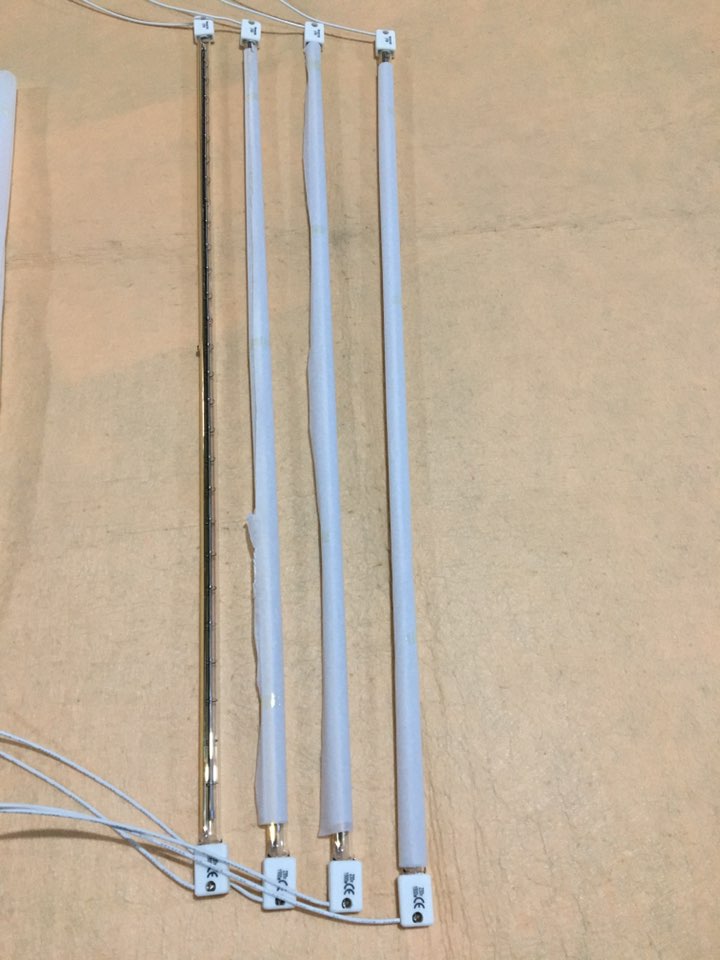
We build this 610mm, 2000W infrared halogen heater as a direct-fit, high-output heating element for industrial machines that need compact, controllable heat. The white coating and quartz envelope are not cosmetic—they are functional choices that shape the output spectrum, stabilize the element temperature, and protect the filament. The result is a heater that can be wired up quickly, holds its setpoint, and survives the harsh environment of a production cell.
Technical Deep-Dive: Size, Power, and Electrical Spec
The 610mm length and 2000W rating are matched to give you a predictable heat profile in a tight footprint. A longer tube spreads the heat over a wider area, which helps reduce hot spots on large surfaces, while 2000W provides enough watt density for fast warm-up on plastics, adhesives, and small tooling. The operating voltage is selected to match common industrial control panels. High-voltage halogen elements reduce current draw for the same power, which means you can run thinner internal wiring and smaller contactors, but it also demands a clean, dry connection. If you run this in a low-voltage, high-current arrangement, the wiring and terminals must be sized accordingly. The trade-off is always thermal control versus electrical infrastructure.
Material & Design: Halogen, Quartz, Coating, and Connectors
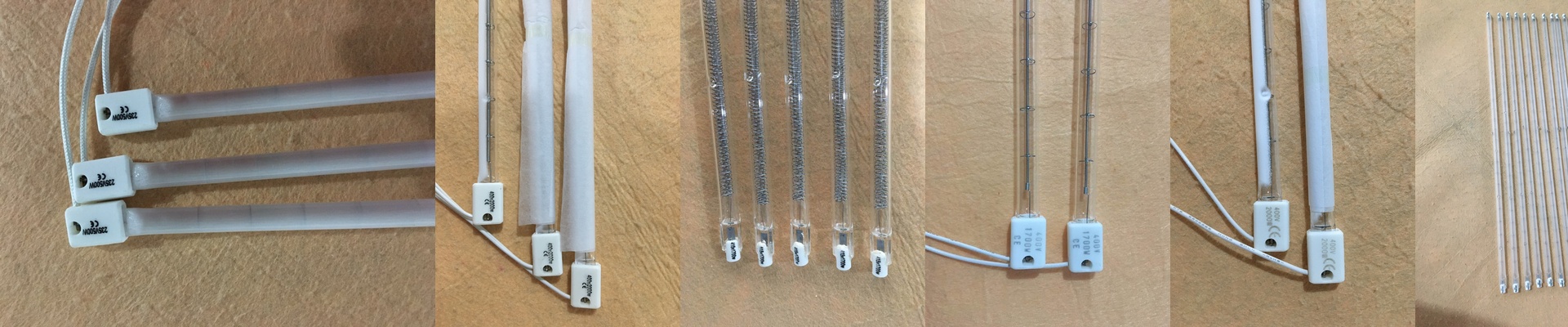
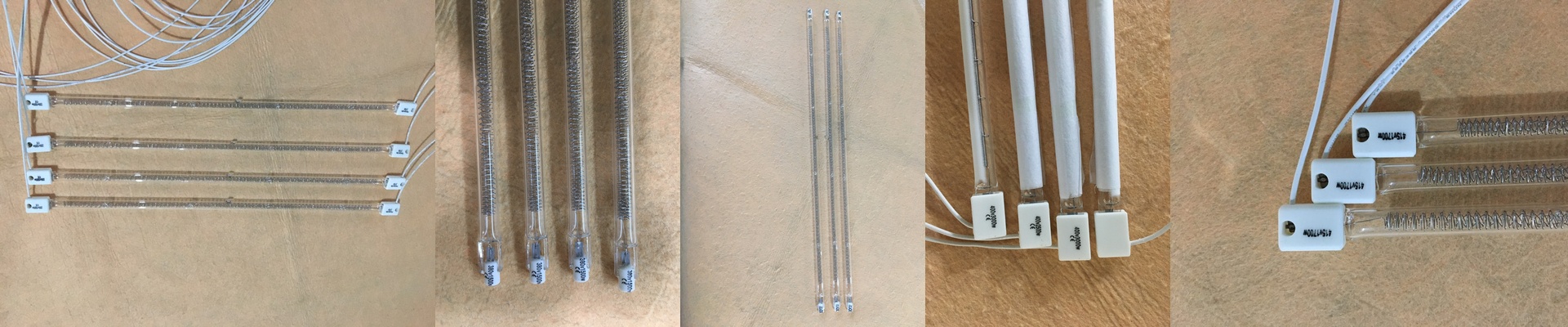
Inside the quartz tube, the halogen cycle keeps the filament stable. The fill gas allows the filament to run hotter without rapid blackening, so the heater maintains consistent output over time. The quartz envelope handles the thermal shock of rapid on/off cycling and resists chemical attack from process contaminants. The white coating is a ceramic-based reflective layer that directs more infrared energy forward and reduces losses to the rear. This improves efficiency on the target surface and lowers the temperature of nearby components. It also helps even out the heat distribution, which matters when you are heating a delicate part or trying to hold a uniform melt line. For termination, we spec R7s and Sk15 connectors because they are built for heat and vibration. R7s is a standard double-ended fitting that makes the heater a drop-in replacement in many existing fixtures. Sk15 gives you a more secure mechanical lock and better current handling in high-vibration applications. Both options reduce hot-spot stress at the ends and keep the joint stable during thermal cycling.
Application & Benefits: What This Configuration Solves
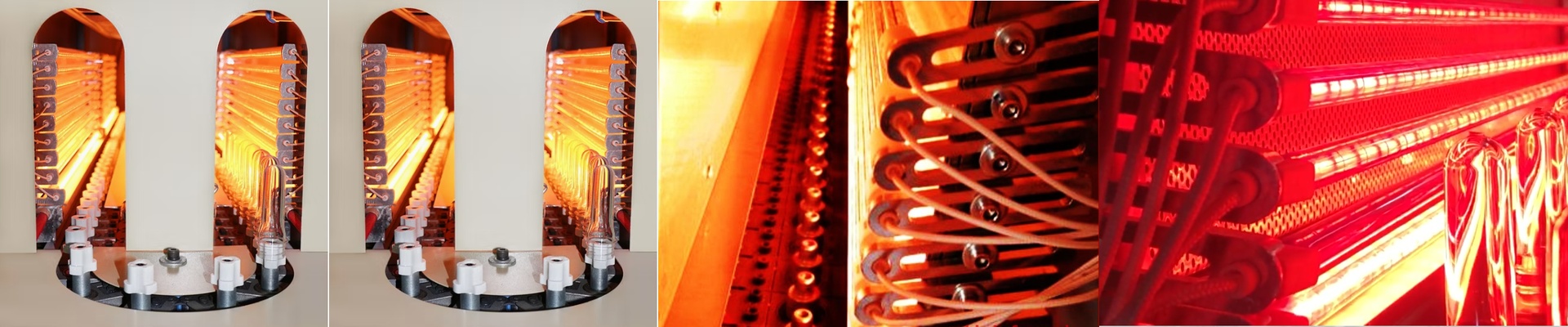
We see this heater used where you need fast response and localized heating: PET blowing stations, plastic welding, packaging sealing, and coating curing. The infrared output delivers heat directly to the surface without heating the surrounding air, which cuts warm-up time and keeps the machine footprint small. For engineers, the practical benefits are straightforward. The 610mm length simplifies mounting in tight spaces, the 2000W rating provides enough punch for production cycles, and the coated design reduces rear-side heat bleed. The halogen chemistry keeps output stable, so your temperature control loop does not chase large swings. One reality check: pushing 2000W into a compact tube generates high surface temperatures. Your machine must manage airflow and clearance, and your controls should include proper over-temperature protection. Treat the heater as part of the thermal system, not just a consumable, and it will run reliably.
Selection Notes
Match the connector type to your holder and confirm the voltage matches your control panel. Verify mounting clearances for the 610mm length, and ensure the target material can absorb the infrared spectrum delivered by the white-coated design. When these details are aligned, the heater performs as a predictable, maintainable industrial component.